

Why Nitrates Spike in the Summer in Iowa
Every summer, it seems to happen again.
The weather warms up, the lawn sprinklers come out, and nitrates start showing up in the news around Des Moines. Sometimes it sounds like a brand-new problem. But for Central Iowa, this is more like a seasonal rerun with a few new plot twists.
So why does nitrate pollution seem to flare up around summer?
The short answer: rain, soil, fertilizer, rivers, and timing. Very Iowa, unfortunately.
Why Nitrates Become a Summer Water Problem
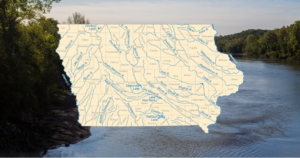
Nitrates are a form of nitrogen. Nitrogen is common in fertilizer, manure, soil, septic systems, and decaying plants. In the right place, nitrogen helps crops grow. In the wrong place, it can move into groundwater, streams, and rivers.
Around Des Moines, this matters because the Raccoon River and Des Moines River are major sources for the metro’s drinking water. When nitrate levels rise in those rivers, water utilities have to work harder to treat the water before it reaches homes.
In May 2026, residents were already urged to limit water use ahead of summer because raw water sources were seeing unusually high nitrate levels in late spring. Officials said nitrate concentrations are typically elevated from late April through late July, often called “nitrate season” locally. (Iowa Public Radio)
The Rainfall Connection
Here’s the part that makes summer tricky: Farm fields need fertilizer. Spring brings rain. Rain moves through soil. If there is more nitrate in the soil than crops can use right away, some of it can wash into tile lines, ditches, creeks, and rivers.
That is why nitrate spikes often show up after wet stretches, especially in late spring and early summer. It is not just “hot weather” causing the problem. It is the combination of fertilizer timing, rainfall, soil conditions, and river flow.
Think of it like a kitchen sponge. If the sponge is full and you keep pouring water on it, something is going to run off the edge.
Why Des Moines Hears About Nitrates So Often
Des Moines sits downstream from a lot of farm country. That does not mean every farmer is careless, and it does not mean every glass of tap water is unsafe. It means Central Iowa has a geography problem, a timing problem, and a treatment challenge all stacked together.
In April 2026, Central Iowa Water Works had already run its nitrate removal facility for more than 100 days that year, with both the Raccoon River and Des Moines River recording many days above the 10 mg/L nitrate level used as the federal drinking water limit for treated water (KCCI News).
What Are Nitrates?
Nitrates are compounds made of nitrogen and oxygen. They occur naturally, but high levels in drinking water are usually tied to fertilizer, manure, septic systems, and runoff from land.
You cannot see, smell, or taste nitrates in water.
That is the sneaky part. Your water can look perfectly clear and still have nitrate levels worth checking.
If you are on a private well near Des Moines or in a rural area outside the metro, testing matters even more. It is recommended that private well users test at least once a year for coliform bacteria and nitrates (IowaDNR).
Are Nitrates Bad for You?
At elevated levels, nitrates can be a health concern, especially for infants under six months and pregnant people. The EPA’s federal drinking water limit for nitrate is 10 mg/L as nitrogen.
For babies, the biggest concern is a condition often called “blue baby syndrome,” where the body has trouble carrying oxygen properly. Some newer research has also raised questions about possible health effects at lower levels, which is one reason nitrates are getting more attention in Iowa water conversations. Testing your water is the best way to know if there is a need for homeowners to act.
What to do now to protect yourself
Nitrates are not something you fix with a pitcher filter or by boiling water. In fact, boiling can make nitrate concentration worse because some water evaporates while the nitrate stays behind.
The CDC lists reverse osmosis, ion exchange, and distillation as treatment options for nitrate in drinking water. For many homes, a reverse osmosis drinking water system is one of the most practical ways to reduce nitrates at the tap.
Culligan of Des Moines can test your water, explain what the results mean in plain English, and recommend a system that fits your home. That may include a reverse osmosis drinking water system for the kitchen sink, a customized filtration setup, or additional treatment if you are on a private well.
You can start with a local water test from Culligan of Des Moines (link to: https://culligandesmoines.com/free-water-test/ ) so you know what is actually coming out of your tap.
See What Your Des Moines Neighbors Are Saying
Got a new RO water system installed a couple weeks ago. Great service, professional install, and great tasting water! No complaints!
Dennis K., Verbatim Google Review
Was very pleased with the timely, efficient service we received.
We had a reverse osmosis system put in. They tested our water and walked us through various options and prices. Very low pressure and not really a sales pitch. Just a lot of good facts and walking through the various options for services that they provide. The sales representative offered cheaper options throughout the process and really seemed to focus on trying to meet our water needs.
Tyler M., Verbatim Google Review
Drinking Water Should Not Be a Mystery
Summer in Des Moines should be about iced coffee, backyard dinners, farmers markets, and trying to keep the lawn alive without angering the water restrictions.
It should not be about wondering what is in your drinking water.
A reverse osmosis system can give your household a dedicated source of cleaner drinking water for coffee, baby formula, cooking, pet bowls, ice cubes, and that water bottle you swear you are going to refill more often this year.
We support the dream.
Not Sure What Is in Your Water?
If nitrates are in the news, it is natural to wonder what that means for your own home.
City water and private well water can have very different concerns. Two homes a few miles apart can test differently. That is why a water test beats guessing every time.
Frequently Asked Questions
Nitrates are concerning because they can interfere with how blood carries oxygen, especially in infants. High nitrate levels are also part of a bigger water quality issue in Iowa because they can affect rivers, drinking water treatment, and downstream ecosystems.
Start with a water test. Once you know your nitrate level, Culligan of Des Moines can recommend the right treatment option. Many homeowners choose a reverse osmosis drinking water system for cleaner water at the kitchen tap.
Nitrates can be removed with reverse osmosis, ion exchange, or distillation. Boiling water does not remove nitrates. Standard carbon filters and basic pitcher filters are usually not designed for nitrate removal.
Yes, reverse osmosis can reduce nitrates in drinking water when the system is designed and maintained properly. The CDC lists reverse osmosis as one treatment method for nitrate removal, along with ion exchange and distillation.
Nitrates can be harmful at elevated levels, especially for infants under six months and pregnant people. The federal drinking water limit for nitrate is 10 mg/L as nitrogen. Since nitrates have no taste, smell, or color, testing is the only way to know your level.
Nitrates are a form of nitrogen that can get into water from fertilizer, manure, septic systems, and natural soil processes. In Central Iowa, nitrate concerns often rise when rain carries nitrogen from fields into rivers, streams, or groundwater.
What’s next
Nitrate season does not have to leave you guessing.
Whether you are on Des Moines city water or a private well outside town, Culligan of Des Moines can test your water and help you understand your options.


