
Soft Water, Filtered Water, or Reverse Osmosis: What Does Your Des Moines Home Actually Need?
You start out searching for “at-home water filter,” and pretty soon the internet has you knee-deep in carbon filters, reverse osmosis, multi-stage filtration, under-sink filter systems, whole-home filtration, nitrate claims, and enough acronyms to make you wonder if you raise your eyebrows anymore, will you get permanent wrinkles?
And the big question is usually pretty simple: What do I actually need?
Maybe your glasses come out of the dishwasher cloudy. Maybe your shower doors look like they were dusted with chalk. Maybe your tap water tastes a little pool-ish. Or maybe you saw another headline about nitrates in Central Iowa and thought, “Well, now what?”
Here’s the honest answer: the best water system depends on what problem is actually in your water.
Not what an online ad says, not what your neighbor bought and not what a salesperson can install fastest.
Your water should be tested first. Then the solution should match the problem.
Why Water Filtration Gets Confusing So Fast
Most people use “water filter” as one big bucket term. But in the water treatment world, different systems do very different jobs:
• A water softener is not the same thing as a drinking water filter.
• A carbon filter is not the same thing as reverse osmosis.
• A whole-home filter is not always the right tool for a drinking water issue.
And a multi-stage filter sounds impressive, but “multi-stage” only tells you there are multiple layers or steps. It does not automatically tell you what contaminants it is certified or proven to reduce.
That’s where homeowners can get sideways. The name sounds technical, the product page looks polished, and before you know it, you’ve bought a system before anyone has checked what is coming out of your faucet.
Soft Water: Best for Hard Water Problems
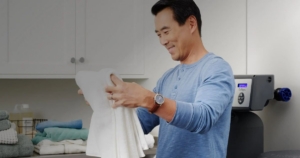
Soft water is about minerals, mostly calcium and magnesium.
Here in Central Iowa, hard water is a familiar nuisance. It shows up as crusty faucets, white spotting on dishes, dry-feeling skin, stiff laundry, scale in water heaters, and appliances that seem to age faster than they should.
A water softener helps reduce hardness minerals before they move through your plumbing and appliances. That means softer laundry, less scale buildup, fewer spots, and a home that is generally easier to clean.
When a Softener May Be a Good Fit
• White buildup on faucets and showerheads
• Spotty dishes, even after running the dishwasher
• Dry skin or hair that feels rough after showering
• Laundry that feels stiff or scratchy
• Water heater scale, rumbling, or repeated appliance issues
• Soap that does not lather well
If those are your symptoms, start with a local test and learn what your hardness level actually is. You can compare options for Des Moines water softeners once you know what your water is doing.
Filtered Water: Best for Taste, Odor, Chlorine, and Certain Whole-Home Concerns

Filtered water usually refers to carbon filtration or other media filters designed to improve taste, smell, and certain water quality concerns.
Carbon is common because it can do a nice job reducing chlorine taste and odor. If your water smells like a swimming pool when you fill a glass, carbon may help.
A whole-home carbon filter may make sense when you want the water throughout the house to smell or taste better, especially for bathing, cooking, laundry, and general use.
An under-sink filter may make sense when you mainly care about the water you drink and cook with.
But here is the important part: carbon filtration is not automatically a nitrate solution.
That is where people get tripped up. A product may say “multi-stage filter” or “advanced carbon filter,” but that does not mean it is the best choice for nitrates. The proof should be in the water test, the product performance data, and the follow-up test after installation.
When a Carbon Filter May Be a Good Fit
• Your water tastes or smells like chlorine
• You want better-tasting tap water
• You want a simple at-home water filter for taste and odor
• You want filtered water at one sink without treating the whole house
• You want whole-home filtration for certain aesthetic water concerns
Carbon can be useful. It just should not be sold as a cure-all for every water issue under the Iowa sun.
Reverse Osmosis: Best for Drinking Water and Nitrate Concerns
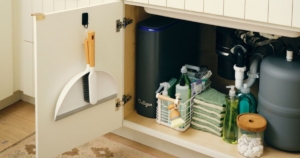
Reverse osmosis, often called RO, is a drinking water treatment system usually installed under the kitchen sink. It is designed to reduce a broader range of dissolved substances than a basic carbon filter.
If nitrates are the concern, reverse osmosis is the system homeowners should be asking about first for drinking water.
That does not mean every home needs RO. It means if your concern is what your family drinks, cooks with, makes coffee with, or mixes baby formula with, RO deserves a real conversation.
A reverse osmosis drinking water system can also improve taste, reduce reliance on bottled water, and give you a dedicated faucet for treated drinking water.
When Reverse Osmosis May Be the Better Choice
• You are worried about nitrates in drinking water
• You want bottled-water-style taste from your kitchen sink
• You want an under-sink filter with stronger contaminant reduction than basic carbon
• You want drinking and cooking water treated separately from shower and laundry water
• You want a system that can be tested before and after service
For many Des Moines area homes, RO is not about treating every drop of water in the house. It is about treating the water you actually consume.
Do You Need to Treat Nitrates for the Whole House?
Usually, nitrates are a drinking water issue, not a shower issue.
You do not need soft water in your drinking glass for the same reason you need it in your water heater. You do not need nitrate reduction in your shower for the same reason you may want it at the kitchen sink.
That matters because treating the right water at the right place can save money and prevent overbuying.
For nitrates, the first step is not buying a whole-home filter. The first step is a water test.
A proper test should tell you what is actually present and at what level. A legitimate water test should include hardness, TDS, chlorine, and nitrates. For well water, nitrate and bacteria testing matter too.
The West Des Moines Story: When the Wrong Filter Replaced the Right One
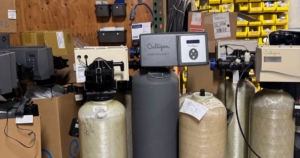
Here is the kind of thing Steve (the third-generation owner of Culligan Des Moines) sees that makes water treatment folks grind their teeth a little.
A West Des Moines homeowner called Sarah had a good, well-functioning five-stage reverse osmosis drinking water system in the home for years. It was the kind of under-sink system you would want to keep, especially if drinking water quality was the concern.
Then an online water filter company with its flashy website and convincing sales pitch made her believe she needed something else. She bought a multi-stage carbon filter from them.
It sounded impressive. It looked like a serious piece of equipment. Big tank, clean labels, plenty of “advanced filtration” language and sentences about “protecting your family”. Sarah had been concerned about nitrates, and like a lot of homeowners, she was trying to do the responsible thing. “They specifically mentioned contaminant removal and I wasn’t sure the unit we had addressed that. Hearing about nitrates in the news, I just wanted to take action. I didn’t want to take any chances.”
But nobody from that online company had come out first to test the water in the home. Nobody checked whether nitrates were actually the issue at that address. Nobody explained that a carbon filter and a reverse osmosis unit do different jobs.
And worst of all, Sarah’s existing reverse osmosis system was removed.
We found out during a routine salt delivery. Steve was training a route team member that day, and they went downstairs to look over the setup. The brine tank was there. The plumbing had clearly been changed. But the RO system that should have been under the sink was gone.
So he asked the obvious question: “What happened to the RO?”
Sarah explained that she had gotten a new system because she was worried about nitrates.
That is when the situation got frustrating. In that part of West Des Moines, her water situation did not match the nitrate concern she had been sold on. Sarah had paid for a new filter to solve a problem that had not been diagnosed in the home, and the system that could have helped with drinking water concerns had been taken out.
Then came the second problem. After the plumbing work, the softener was not working correctly either. Water was no longer moving through it the way it should.
So now the homeowner had:
• A removed RO drinking water system
• A new multi-stage carbon filter that did not replace what the RO was doing
• No clear before-and-after water test
• No proper verification after installation
• A softener that was not working after the plumbing changes
Steve gently told Sarah she had made a mistake and was misled by marketing.
Solution: Test First, Then Match the System to the Problem
The fix is not “always buy reverse osmosis” or “always buy carbon.” It is not “always treat the whole house.” The fix is to start with the water.
At Culligan Des Moines, the goal is to look at the symptoms, test the water, explain what the numbers mean, and then recommend the system that fits the actual issue.
• If the concern is hard water, a softener may be the answer.
• If the concern is chlorine taste or odor, carbon filtration may be enough.
• If the concern is nitrates in drinking water, reverse osmosis may be the better fit.
If there are multiple issues, the answer may be a combination, such as a softener for the whole home and RO for drinking water.
That is why a free water test is the best first step before buying any home filtration system.
“Great Company! Pleased with how my water feels and the service has been outstanding!” – Jina Y. via Google Reviews
“Clear and fair pricing. Decent communication.” Matt T. via Google Reviews
What Should a Real Water Test Include?
A good water test should not feel like a magic trick.
You should be able to see what is being tested and understand what the results mean. If someone tells you, “You have nitrates,” it is fair to ask, “What level did the test show?”
For Des Moines area homes, testing should usually look at:
• Hardness
• TDS, or total dissolved solids
• Chlorine
• Nitrates
For private wells, bacteria testing is also important.
A good company should also explain the difference between what is being tested at the kitchen sink and what may be happening elsewhere in the home.
What Should Happen After Installation?
This is the part many homeowners forget to ask about.
After a system is installed, someone should verify that it works.
For a drinking water system, that may include checking for leaks, checking production rate, comparing water quality before and after treatment, and making sure the system is actually reducing what it was installed to reduce.
For a softener, that may include checking settings, salt use, water flow, bypass position, and whether softened water is actually reaching the home.
Buying the equipment is only part of the job. Verifying the equipment is doing its job is the part that protects the homeowner.
Quick Comparison: Softener vs Carbon Filter vs Reverse Osmosis
| Best for | Usually treats | Not meant for | Common signs you need it | |
|---|---|---|---|---|
| Water Softener | Hard water, scale, spots, appliance protection, and better soap performance | Whole home | Nitrate reduction or drinking water contaminant reduction | White scale around faucets or spotty dishes |
| Carbon Filter | Taste, odor, chlorine reduction, and some whole-home filtration needs | Whole home or one drinking water location | Nitrates | Chlorine smell or unpleasant tap water taste |
| Reverse Osmosis | Drinking water, cooking water, nitrate concerns, and bottled-water-style taste | One faucet, commonly at the kitchen sink | Softening water to protect appliances throughout the home | You are concerned about what is in the water you drink |
Frequently Asked Questions About Softened Water
Reverse osmosis and carbon filtration do different jobs. Carbon is commonly used for taste, odor, and chlorine concerns. Reverse osmosis is often a better fit for drinking water concerns, including nitrate reduction. The right choice depends on your water test.
No. “Multi-stage” only means the water moves through multiple filtration steps. It does not automatically mean the system reduces nitrates or solves your specific water problem. Ask for test results and performance data.
For many homes, reverse osmosis is one of the most common drinking water solutions for nitrate concerns. The first step should be testing your water to confirm whether nitrates are present and at what level.
Usually, nitrates are a drinking water issue. Many homeowners focus nitrate treatment at the kitchen sink with a reverse osmosis drinking water system. A water test can help determine what is appropriate for your home.
Yes, many homeowners choose an under-sink filter or reverse osmosis system to reduce bottled water use and improve drinking water taste. The best option depends on whether you are mostly concerned about taste, nitrates, or broader drinking water quality.
Not without a clear reason. A carbon filter and an RO system can serve different purposes. In some homes, keeping reverse osmosis for drinking water and adding filtration elsewhere may make more sense than replacing one with the other.
Before you spend money…
Before you spend money on a filter, find out what your water actually needs.
Culligan Des Moines can test your water, explain the results in plain English, and help you choose the right setup for your home, whether that is a softener, carbon filtration, reverse osmosis, or a combination.


