
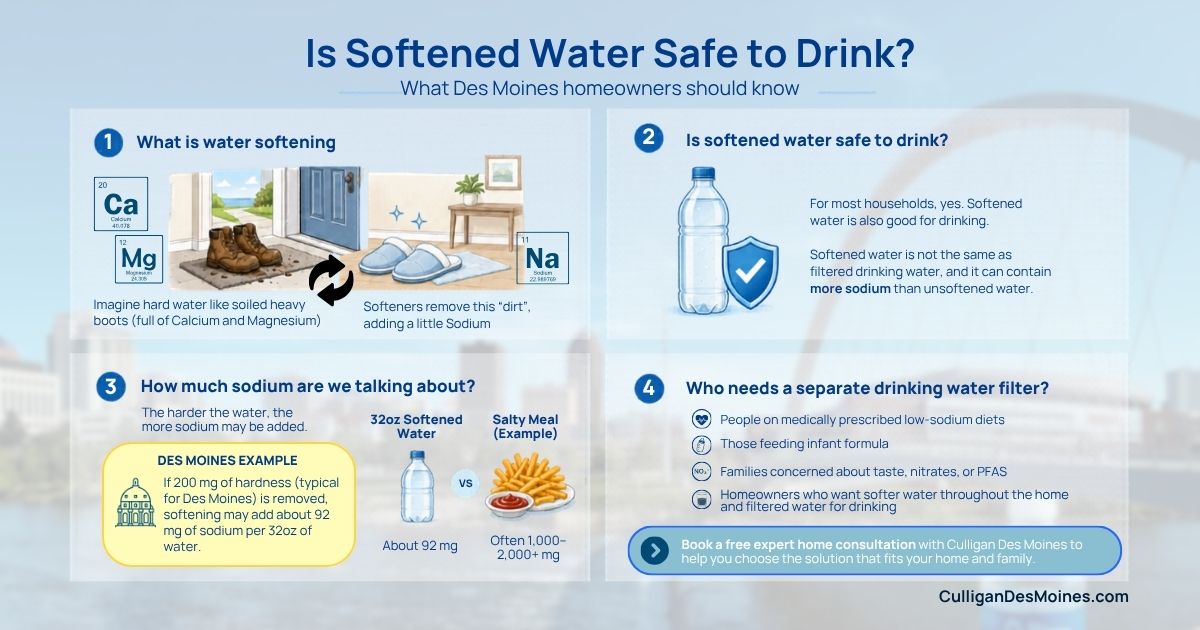
Is Softened Water Safe to Drink? How to Choose Water That Fits Your Home, Health, and Lifestyle
Katie from West Des Moines had just finished remodeling her kitchen. New countertops, new appliances, and a matte black faucet she had spent more time choosing than she wanted to admit (to suit her Williams Sonoma stoneware, of course!).
For the first few weeks, everything looked perfect. Then the water spots started showing up.
First on the glasses. Then around the faucet. Then on the shower door upstairs. She also noticed the dishwasher did not seem to be doing as good a job as it used to, even though it was brand new.
The neighbor three doors down at her Conroy Creek home told Katie that softening your water is the best way to reduce spots on glasses and dishes. But then she found those worrying online comments asking if it’s safe to drink, too.
If I soften the water in my house, is softened water safe to drink?
That is a fair question. Many Des Moines-area homeowners ask some version of it. They may be thinking about their kids, a new baby, pets, sodium, taste, nitrates, bottled water, or whether a water softener and a drinking water system do the same thing.
The short answer is this: softened water is great to drink for 95% of households, but it is not the same as filtered drinking water.
The better question is: What do you want your water to do for you?
What Is Softened Water?
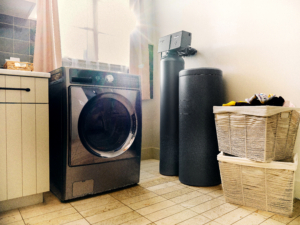
Softened water is water that has been treated to reduce hardness minerals, mainly calcium and magnesium.
Those minerals are what cause many of the hard water problems homeowners notice around the house, including:
• White spots on glasses and dishes
• Chalky buildup around faucets
• Soap that does not lather well
• Stiff laundry
• Dry-feeling skin or hair after showering
• Scale buildup in appliances and plumbing
• Extra wear on water heaters, dishwashers, washing machines, and fixtures
A water softener is designed to help with those problems throughout the home. It is not just about how the water tastes. It is about how the water behaves when it touches your plumbing, appliances, fixtures, clothes, dishes, skin, and hair.
For many homeowners, that is the main reason they look into soft water in the first place. They are tired of replacing appliances, scrubbing spots off glassware, or wondering why their new fixtures already look worn.
How Water Softening Works: Muddy Boots for Slippers
Think of hard water like someone walking through your home in muddy work boots.
Those “boots” are calcium and magnesium, the minerals that make water hard. As hard water moves through your home, those minerals leave marks behind: spots on glasses, scale around faucets, soap scum in the shower, buildup inside appliances, and residue on fixtures.
A water softener works by asking the water to leave those heavy, messy boots at the door and continue through your home in something much lighter: like indoor slippers.
In water treatment terms, that trade is called ion exchange. A typical ion-exchange softener reduces calcium and magnesium and replaces them with sodium or potassium ions. That is why soft water behaves differently. It is no longer carrying the same scale-causing minerals through your home.
But this is also where the sodium question comes in.
The salt you add to a softener is not being poured straight into your tap water like table salt into soup. However, the softening process can increase the amount of sodium in the water. How much sodium is added depends on how hard your water was to begin with. The harder the water, the more calcium and magnesium need to be exchanged.
Is Softened Water Safe to Drink?
For most people, softened water is safe to drink.
But it is better to answer this honestly than to brush off the concern. Softened water can contain more sodium than unsoftened water. For most healthy adults, that added sodium is often small compared with the sodium people get from food, especially processed or restaurant foods. People on low-sodium diets may want to use filtered or bottled water to reduce sodium intake.
So the real answer is:
Softened water is generally okay for many households, but it may not be the best drinking water choice for every person in every home.
It may be worth asking more questions if:
• Someone in the home is on a medically prescribed low-sodium diet
• Someone has certain heart, kidney, or blood pressure concerns
• You are preparing infant formula
• Your water is extremely hard before treatment
• You simply prefer the taste of separate filtered drinking water
• You are also concerned about nitrates, PFAS, chlorine taste, odor, or other drinking water issues
If you have a medical concern, it is always best to ask your healthcare provider. From a water treatment perspective, it is also helpful to test your water and understand what is actually in it before deciding what solution makes sense.
How Much Sodium Is Added to Softened Water?
There is no single number that applies to every home. The amount of sodium depends on the hardness of your water before it enters the softener.
A softener may add about 46 mg of sodium per liter for every 100 mg/L of hardness minerals removed. So for the average Des Moines household with a water hardness of 200 mg/L, softening could add about 92 mg of sodium per liter, before considering any sodium already present in the water.
For perspective, that is usually much less sodium than what most people get from common foods. That does not mean the sodium question is silly. It means the context matters.
For a healthy adult, softened water may be completely reasonable. For someone carefully managing sodium intake, or for a parent preparing infant formula, a separate drinking water option may be the better choice.
This is why we prefer a practical answer over a one-size-fits-all answer.
Softened Water Is Not the Same as Filtered Drinking Water
This is where many homeowners get confused.
A water softener and a drinking water system do different jobs.
A water softener mainly helps with hardness. It can make water easier on plumbing, fixtures, appliances, dishes, laundry, skin, and hair.
A drinking water system is focused on the water you drink (and cook with or give to your pets). Depending on the system, it may help reduce taste, odor, chlorine, dissolved solids, nitrates, PFAS, and other concerns.
That means softened water can be helpful throughout your home, while a separate drinking water system can be helpful at the kitchen sink or another point where your family fills glasses, bottles, coffee makers, and pet bowls.
One is not automatically better than the other. They simply solve different problems.
When a Separate Drinking Water System Makes Sense
A separate drinking water system may be worth considering if:
• You do not like the taste of your tap water
• You currently buy bottled water
• You are concerned about nitrates or PFAS
• You want better-tasting water for coffee, tea, or cooking
• You want a dedicated tap for drinking water
• You want extra peace of mind for kids, pets, or guests
• Someone in the home is watching sodium intake
Again, this is not about making softened water sound scary. It is about choosing the right water for the right use.
Does Softened Water Remove Nitrates?
No. A standard water softener is not the right tool for nitrate reduction.
That is an important distinction for homeowners in Iowa. Nitrates have become a bigger topic in Des Moines and across the state, especially during warmer months when water quality concerns often return to local news.
If your concern is nitrates in drinking water, you should not assume a softener solves that problem. You need a system designed for drinking water filtration, and you need testing to understand your home’s water conditions.
For many households, reverse osmosis is the more relevant conversation when nitrates are part of the concern.
Does Softened Water Remove PFAS?
A standard water softener is not designed as a PFAS treatment system.
PFAS are often called “forever chemicals,” and they require a different treatment conversation than hardness minerals. If PFAS are part of your concern, the best first step is to test your water and talk through drinking water filtration options with a professional.
This is another reason it helps to separate the question of soft water from the question of drinking water.
Soft water can be great for your home. Filtered drinking water can be better suited for what your family drinks. They are related, but they are not the same.
What About Babies, Pets, and Sensitive Households?
Families often ask about softened water because they are thinking about someone specific in the home.
A new baby. A toddler. A grandparent. A dog. A cat. Someone with dietary restrictions. Someone who drinks a lot of water every day.
Those are valid concerns.
For babies, especially when preparing infant formula, it is best to ask your pediatrician or healthcare provider about the type of water you should use. For people on sodium-restricted diets, it is also wise to ask a medical professional before using softened water as the main drinking water source.
For pets, many households use the same drinking water they use for themselves. If your family prefers filtered drinking water, your pets may end up benefiting from that same setup.
The main point is simple: if your concern is daily drinking water, you should choose water based on what is in it, who is drinking it, and what you want it to do.
What about pH or Alkaline Water?
Some people also wonder whether softened water is less “alkaline,” or whether alkaline water is better for health.
For most households, this is not the first thing to worry about. Your overall diet usually plays a much bigger role in what your body takes in each day than the pH of your tap water. If you are concerned about pH, sodium, nitrates, PFAS, or taste, the best first step is still the same: test your water before choosing a system.
The Best First Step Is a Free Water Test
You do not have to guess whether softened water is enough for your home. You also do not have to sort through every technical term on your own.
Culligan of Des Moines can test your water and help you understand what is actually happening in your home.
From there, you can decide what matters most:
• Protecting appliances
• Reducing spots and buildup
• Improving taste
• Replacing bottled water
• Addressing drinking water concerns
• Making maintenance easier
• Getting a second opinion on existing equipment
The goal is not to sell every household the same system. The goal is to match the right solution to the right problem.
Frequently Asked Questions About Softened Water
For many households, softened water is safe to drink. However, softened water can contain added sodium depending on the hardness of the original water and the type of system used. If you are on a sodium-restricted diet or have a medical concern, ask your healthcare provider.
Softened water is not the same as saltwater. A traditional softener uses salt in the treatment process, but the water itself usually does not taste salty. The softening process can add sodium to the water.
The amount depends on how hard your water is before it enters the softener. The harder the water, the more calcium and magnesium need to be exchanged, which can increase the amount of sodium added during softening.
Many people do. Whether it is the best choice for your household depends on your water, your taste preferences, and your health needs. Some families prefer to use softened water throughout the home and a separate filtered drinking water system at the kitchen sink.
It may not be the best choice for everyone. People on low-sodium diets should ask a healthcare provider and consider a dedicated drinking water option, such as reverse osmosis, depending on their water and household needs.
Parents should ask a pediatrician or healthcare provider about the best water to use for infant formula. Many families choose a dedicated drinking water system for added peace of mind.
No. Softened water has been treated to reduce hardness minerals like calcium and magnesium. Filtered water may be treated to reduce taste, odor, chlorine, dissolved substances, or certain contaminants, depending on the system.
No. A standard water softener is not designed to remove nitrates. If nitrates are a concern, you should test your water and ask about drinking water systems designed for nitrate reduction.
A standard water softener is not designed as a PFAS treatment system. PFAS concerns require a different drinking water filtration conversation and should start with proper testing.
It depends on what you want to solve. A water softener helps with hardness throughout the home. Reverse osmosis is typically used for drinking water. Many homes use both because they address different concerns.
Yes. Many households use a water softener for whole-home comfort and appliance protection, along with a separate drinking water system for the kitchen tap.


