
The Washing Machine Broke Again? Here’s How to Make Your Appliances Last Longer in Des Moines
You fixed it last year. Now it’s making that noise again. The washing machine starts leaking. The dishwasher leaves white film. The water heater struggles. For frustrated Alexandra F. in West Des Moines, this was almost expected: “In my parents’ generation, appliances were expected to last for life, but as for me nowadays, I almost expect an issue every few years”. She bitterly laments: “But this time, we bought a new washing machine and in the first year, we had to deal with two repair bills!”.
Midwest water, especially here in Iowa, is naturally hard. That means it carries dissolved minerals like calcium and magnesium. Over time, those minerals turn into scale. Scale buildup inside pipes and appliances slowly chokes them from the inside out.
If you’re like Alexandra, it might be time to take charge of the problem and think proactively. Here is what people like her can do:
Tips to Make Your Appliances Last Longer in Des Moines
1. Clean and Maintain Appliances Regularly
Hard water appliances need more maintenance than most homeowners realize.
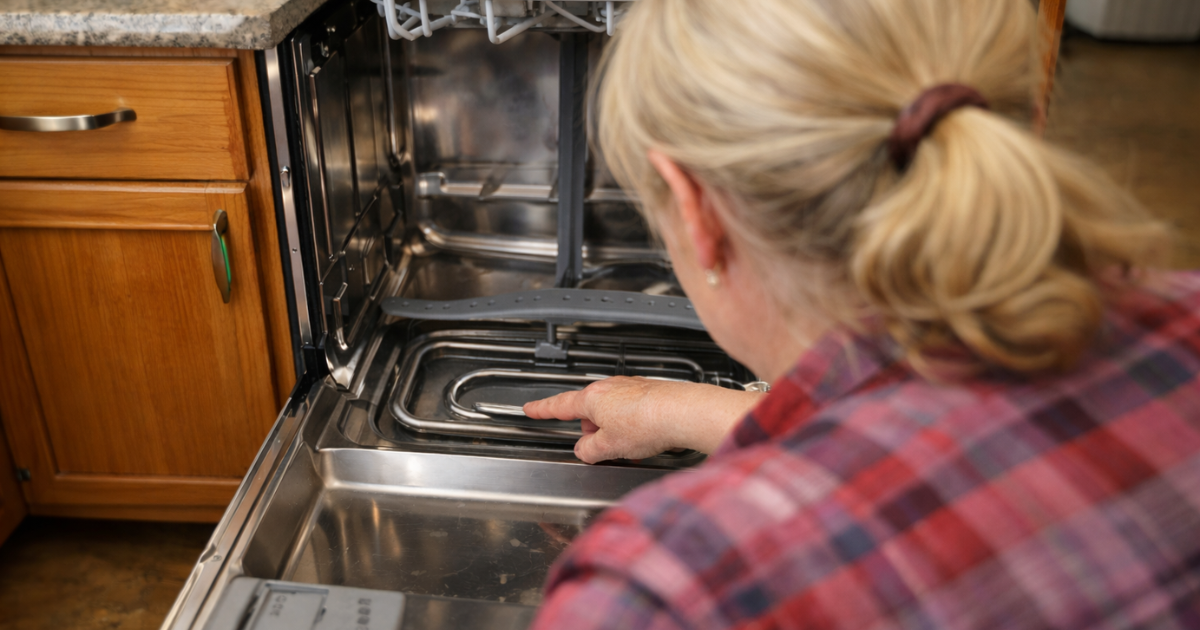
Scale buildup in the dishwasher doesn’t just look bad. It coats heating elements and spray arms, making your dishwasher work harder. The same thing happens inside washing machines and water heaters.
What you can do:
• Run a cleaning cycle with a manufacturer-approved descaler every 1 to 3 months
• Wipe down rubber seals to prevent mineral crusting
• Check and clean dishwasher spray arms
• Flush your water heater annually
“Most maintenance tips were easy to do, we were just lazy I guess. For the last step, the flushing, I had to consult a YouTube video to help me do it. Luckily, it wasn’t too difficult” Alexandra tells us in a candid tone.
When scale builds up, appliances use more energy to do the same job. That shows up on your energy bills. Even a thin layer of mineral buildup can increase energy use significantly.
Less scale means lower energy bills and less strain on parts.
2. Use the Right Detergents (And the Right Amount)
Hard water interferes with soap. That’s why you may find yourself using more detergent just to get clothes clean. But here’s the problem: excess soap mixed with minerals creates even more buildup.
Instead:
• Use detergents formulated for hard water
• Avoid overloading soap
• Consider adding a rinse aid in your dishwasher to combat scale buildup
When soap and minerals combine, they leave residue that shortens appliance lifespan. That cloudy film on your glasses? Classic scale buildup dishwasher symptom. Less residue means fewer repairs.
3. Inspect and Replace Heating Elements When Needed
Water boilers and water heaters take the biggest hit from hard water. Heating elements attract minerals. Over time, they get encased in scale. When that happens:
• Heating takes longer
• Energy usage increases
• The element overheats and fails
If your water heater sounds like it’s popping or rumbling, that’s often hardened scale breaking loose inside the tank.
Annual inspections can catch problems early. Replacing a heating element is much cheaper than replacing the entire unit. “I almost accepted that I need a repairman once a year, but then my neighbor told me she hasn’t had a callout in years,” Alexandra says raising her eyebrows curiously. “When our neighbors built their house next to ours, I remember they got a whole-house water filtration system fitted. Maybe that’s why they don’t have the issues we have with our appliances?” she remembers asking herself.
4. Treat Your Water Before It Damages Your Appliances
Here’s the long-term solution: Softened water protects hard water appliances by removing the minerals that cause scale in the first place. Instead of reacting to breakdowns, you prevent them.
A professionally installed softener from a trusted Midwest filtration company like Culligan of Des Moines can:
• Reduce scale buildup in dishwashers and washing machines
• Extend appliance lifespan
• Lower energy bills
• Reduce repair costs
• Improve water heater efficiency
Although there is an initial cost, most homeowners begin to see real savings around two years after installing a water softener. Between reduced repair calls, lower detergent use, and energy savings, treated water is typically cheaper in the long term and offsets the installation cost.
And if you are also concerned about drinking water quality, adding an RO for house drinking water gives you cleaner, better-tasting water straight from the tap. Many homeowners searching for “reverse osmosis installation near me” are looking for that extra layer of protection.
Softened water protects your appliances. Reverse osmosis protects what you drink.
Life’s Better When Your Appliances Actually Last
“Think about it…” Alexandra told her husband enthusiastically, “No more calling for repairs every year. No more surprise appliance replacements. No more watching our energy bills creep up. Our washing machine lasts longer. Our dishwasher runs cleaner. Our water heater works efficiently.”
She was right. In Des Moines, hard water is common. Appliance failure doesn’t have to be.
If your washing machine broke again, it’s probably not bad luck. It’s your water.
Let’s test it and find out what’s really happening in your home.
Frequently Asked Questions
- Appliances
- Drinking Softened Water
- Elections and Clean Water
- Nitrates
- Nitrates Spike
- PFAS in Des Moines Water
- Water Filter
- Water Filter Certification
- Water Softener
A local company can test your water, account for your home and plumbing, install the right system, and provide service after the sale. This is to ensure the system does what it supposed to months or years after installation.
Be cautious if a company says you need a specific treatment system without testing for that specific issue. If someone recommends nitrate treatment, they should be able to show you the nitrate measurement in your water.
Reverse osmosis systems are commonly used for nitrate and nitrite reduction in drinking water applications. The exact performance depends on the system model, starting water quality, and maintenance, so ask for the performance data sheet and test results.
Ask for your actual nitrate test result, the performance data sheet for the specific system, the expected reduction, the maintenance schedule, the warranty, and how the company verifies performance after installation.
Yes. A certification may apply to a component, material, tank, pressure rating, or a specific contaminant reduction claim. That is why homeowners should ask what exactly was certified.
Not automatically. NSF certification can be valuable, but you need to know what the certification covers. A product may be certified for one contaminant, material, or component, while your home may need help with a different water issue.
Nitrates are concerning because they can interfere with how blood carries oxygen, especially in infants. High nitrate levels are also part of a bigger water quality issue in Iowa because they can affect rivers, drinking water treatment, and downstream ecosystems.
Start with a water test. Once you know your nitrate level, Culligan of Des Moines can recommend the right treatment option. Many homeowners choose a reverse osmosis drinking water system for cleaner water at the kitchen tap.
Nitrates can be removed with reverse osmosis, ion exchange, or distillation. Boiling water does not remove nitrates. Standard carbon filters and basic pitcher filters are usually not designed for nitrate removal.
Yes, reverse osmosis can reduce nitrates in drinking water when the system is designed and maintained properly. The CDC lists reverse osmosis as one treatment method for nitrate removal, along with ion exchange and distillation.
Nitrates can be harmful at elevated levels, especially for infants under six months and pregnant people. The federal drinking water limit for nitrate is 10 mg/L as nitrogen. Since nitrates have no taste, smell, or color, testing is the only way to know your level.
Nitrates are a form of nitrogen that can get into water from fertilizer, manure, septic systems, and natural soil processes. In Central Iowa, nitrate concerns often rise when rain carries nitrogen from fields into rivers, streams, or groundwater.
Quality point-of-use reverse osmosis systems typically achieve a 73% to 97% reduction in nitrates at the tap. Following installation, performance should be verified using a before-and-after test alongside leak and production checks.
Red flags include sales representatives who recommend equipment without testing water first or who claim nitrate levels are above 100 ppm, which would require a public utility shutdown and alert. Homeowners should also beware of sales pitches citing structural tank ratings (such as NSF 52) as proof of nitrate removal performance.
A thorough in-home test should measure four specific parameters: water hardness, Total Dissolved Solids (TDS), chlorine levels, and nitrates. Testing should rely on calibrated equipment rather than neighborhood assumptions or property assessor records.
No. Nitrates are only a health risk when ingested and are not absorbed through the skin during showering, bathing, or doing laundry. A point-of-use reverse osmosis system under the kitchen sink effectively targets drinking and cooking water at a fraction of the cost.
No. The facility treats a portion of incoming water to near-zero nitrate levels and blends it back with untreated water to keep the overall supply below the EPA legal threshold of 10 ppm. Consequently, tap water readings across central Iowa frequently hover between 8 and 10 ppm.
Not without a clear reason. A carbon filter and an RO system can serve different purposes. In some homes, keeping reverse osmosis for drinking water and adding filtration elsewhere may make more sense than replacing one with the other.
Yes, many homeowners choose an under-sink filter or reverse osmosis system to reduce bottled water use and improve drinking water taste. The best option depends on whether you are mostly concerned about taste, nitrates, or broader drinking water quality.
Usually, nitrates are a drinking water issue. Many homeowners focus nitrate treatment at the kitchen sink with a reverse osmosis drinking water system. A water test can help determine what is appropriate for your home.
For many homes, reverse osmosis is one of the most common drinking water solutions for nitrate concerns. The first step should be testing your water to confirm whether nitrates are present and at what level.
No. “Multi-stage” only means the water moves through multiple filtration steps. It does not automatically mean the system reduces nitrates or solves your specific water problem. Ask for test results and performance data.
Reverse osmosis and carbon filtration do different jobs. Carbon is commonly used for taste, odor, and chlorine concerns. Reverse osmosis is often a better fit for drinking water concerns, including nitrate reduction. The right choice depends on your water test.
Yes. Many households use a water softener for whole-home comfort and appliance protection, along with a separate drinking water system for the kitchen tap.
It depends on what you want to solve. A water softener helps with hardness throughout the home. Reverse osmosis is typically used for drinking water. Many homes use both because they address different concerns.
A standard water softener is not designed as a PFAS treatment system. PFAS concerns require a different drinking water filtration conversation and should start with proper testing.
No. A standard water softener is not designed to remove nitrates. If nitrates are a concern, you should test your water and ask about drinking water systems designed for nitrate reduction.
No. Softened water has been treated to reduce hardness minerals like calcium and magnesium. Filtered water may be treated to reduce taste, odor, chlorine, dissolved substances, or certain contaminants, depending on the system.
Parents should ask a pediatrician or healthcare provider about the best water to use for infant formula. Many families choose a dedicated drinking water system for added peace of mind.
It may not be the best choice for everyone. People on low-sodium diets should ask a healthcare provider and consider a dedicated drinking water option, such as reverse osmosis, depending on their water and household needs.
Many people do. Whether it is the best choice for your household depends on your water, your taste preferences, and your health needs. Some families prefer to use softened water throughout the home and a separate filtered drinking water system at the kitchen sink.
The amount depends on how hard your water is before it enters the softener. The harder the water, the more calcium and magnesium need to be exchanged, which can increase the amount of sodium added during softening.
Softened water is not the same as saltwater. A traditional softener uses salt in the treatment process, but the water itself usually does not taste salty. The softening process can add sodium to the water.
For many households, softened water is safe to drink. However, softened water can contain added sodium depending on the hardness of the original water and the type of system used. If you are on a sodium-restricted diet or have a medical concern, ask your healthcare provider.
They do. The only time nitrates typically decrease is in winter, when water isn’t moving through the ground. Once snow melts or rain begins, nitrates start entering the water supply. The more precipitation — and the less vegetation there is to absorb it — the higher the levels tend to be. Construction in your area can also affect readings. In short: levels fluctuate, often without warning.
Yes. Des Moines Water Works draws from several treatment plants, and the Fleur and McMullen plants tend to show higher nitrate readings. However, water from different sources gets mixed before it reaches your tap, so there’s no guarantee that living near a “lower-level” plant means your water is consistently lower. You may not be told when your supply source changes day to day.
The EWG, an independent research organisation, sets its own health guideline for nitrates at 0.14 ppm, significantly stricter than the EPA’s legal limit of 10 ppm. Des Moines Water Works serves most of our area (covering zip codes like 50306, 50340, and 50023), and their water consistently tests above the EWG’s health guideline, even when it’s within the EPA’s legal limit.
We typically see readings between 8 and 10 parts per million (ppm) in city water across our service area. The EPA’s legal limit (called the Maximum Contaminant Level, or MCL) is set at 10 ppm and it’s what Des Moines Water Works, Fleur Drive and McMullen Water Treatment Plants are required to keep levels below. Many homes here are thus sitting just below what regulators define as the legal threshold. Whether that threshold reflects what’s truly “safe” in the long term is a different question.
Not necessarily. In many cases, the system may only need maintenance, adjustment, or servicing. An inspection can help determine whether the system can be improved or if other options should be considered. Culligan of Des Moines offers this for $79.99.
You can do basic checks at home by observing water feel and looking for signs of hardness, but a proper water test provides a clearer and more accurate picture of what is happening. Culligan of Des Moines offers free at-home water tests.
Most systems benefit from being checked every six to 12 months, especially if you notice changes in water quality or usage. Seasonal shifts, like those in spring, are a good time to verify that everything is working properly. Culligan of Des Moines offers this service for $79.99.
This can happen if the system needs adjustment, maintenance, or is not keeping up with your household’s water usage. Changes in incoming water quality can also affect performance over time.
Common signs include white residue on glassware, stiff laundry, buildup on faucets, and water that feels less smooth on your skin. These changes often happen gradually, which is why they can be easy to overlook at first.
You can usually tell by changes in your water. If you notice spots on dishes, reduced soap lather, dry skin, or scale buildup, your softener may not be performing as expected. A water test is the most reliable way to confirm if hardness minerals are still present.
A certified water test is the most reliable way to understand the characteristics of your household water. Culligan of Des Moines offers free in-home water testing so residents can learn more about their water and explore appropriate solutions if needed.
Point-of-use reverse osmosis systems and certain advanced filtration systems are commonly used to reduce PFAS in drinking water. Culligan Des Moines offers all of these options.
No, boiling water is effective for addressing certain biological concerns, but it does not remove PFAS. In fact, because PFAS remain in the water while evaporation occurs, boiling may slightly concentrate them rather than reduce them. For households interested in reducing PFAS or other dissolved contaminants, specialized filtration technologies such as reverse osmosis are typically used.
Many communities in central Iowa draw from regional water sources such as rivers and aquifers. Because water systems are interconnected, neighboring communities may share similar source water characteristics.
Testing across the United States, including in parts of Iowa, has identified PFAS in some environmental samples. Monitoring programs continue to expand as regulators gather more information about how widespread these compounds may be.
Yes. Utilities such as Des Moines Water Works conduct monitoring and testing programs as part of broader water quality oversight. Homeowners who want to understand the specific characteristics of their own tap water may also choose to perform an in-home test.
A water softener removes hardness minerals to protect plumbing and appliances. A reverse osmosis system filters drinking water for taste and purity.
Yes. Most homeowners begin to see savings within about two years through lower repair costs, extended appliance lifespan, reduced detergent use, and lower energy bills.
Hard water leaves mineral deposits inside appliances. Over time, this scale buildup reduces efficiency, increases energy use, and causes parts to fail.


