
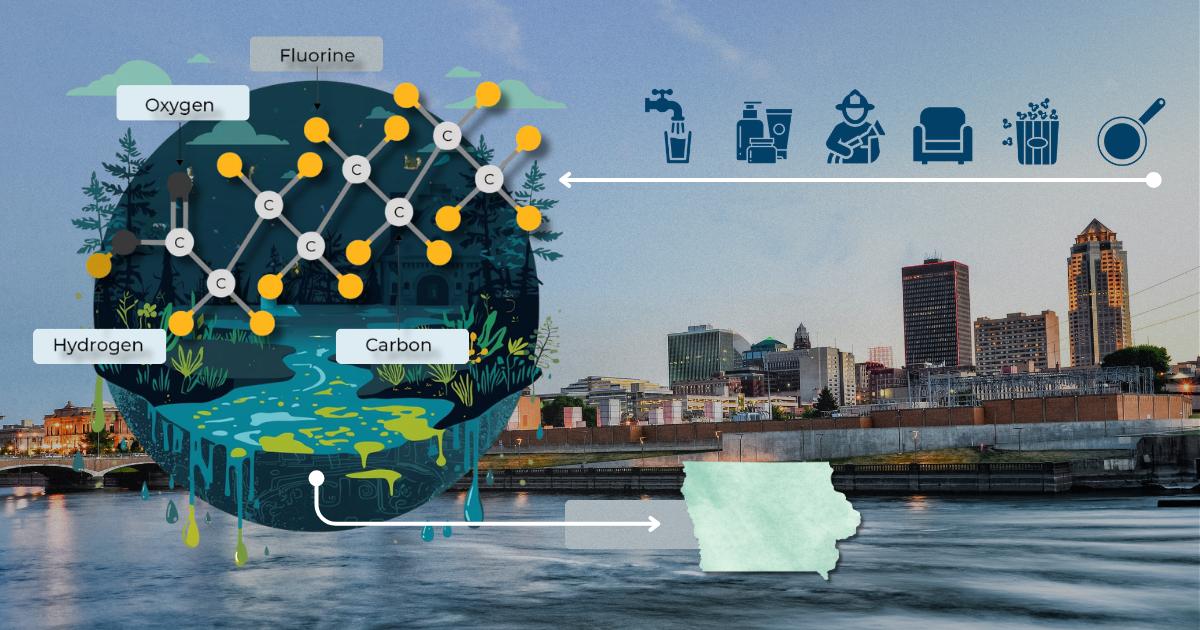
PFAS in Des Moines: What Are “Forever Chemicals” and How Do They Affect Your Water?
In recent years, you may have heard the term “PFAS” mentioned in discussions about drinking water. These compounds are sometimes called “forever chemicals,” and have been detected in raw water sources for central Iowa, with Des Moines Water Works (WDMWW) monitoring to manage levels in finished water.
DMWW operates sophisticated treatment systems and monitors water quality closely as do researchers and regulators. 2023 testing reported levels under 2 ppt, and the utility is actively conducting studies to identify the specific sources of contamination.
For homeowners, the key question is simple: What do these developments mean for the water coming from your own tap?
At Culligan of Des Moines, our role is to help residents understand their water and provide guidance when people have questions.
What Are PFAS?
PFAS stands for per- and polyfluoroalkyl substances, a group of man-made chemicals developed in the mid-20th century.
They were widely used in everyday products because of their unique ability to resist heat, grease, and water. Examples include:
• Nonstick cookware
• Water-resistant clothing
• Food packaging
• Stain-resistant fabrics
• Certain firefighting foams
These chemicals are sometimes referred to as “forever chemicals” because they break down very slowly in the environment. As a result, small amounts can persist in soil and water long after they are introduced.
You can learn more about PFAS from the U.S. Environmental Protection Agency.
How Do PFAS Reach Water Sources?
PFAS can enter the environment through several pathways, including industrial activity, landfills, and historical uses of firefighting foam.
Over time, these compounds may move through soil or groundwater and eventually reach rivers, aquifers, or other sources that communities rely on for drinking water.
In Iowa, drinking water often comes from a combination of surface water and underground aquifers, which means water systems continually adapt their treatment methods.
Local utilities conduct routine monitoring and treatment to meet regulatory standards.
Why PFAS Are Being Studied More Closely
PFAS cannot be seen, smelled, or tasted in water, so their presence can only be identified through laboratory testing. PFAS are linked to significant health risks due to their persistence in the body. Major health effects include increased cholesterol levels, liver damage, decreased vaccine response, increased risk of kidney and testicular cancers, reduced fertility, and developmental issues in children, such as low birth weight (according to the EPA).
As a result, regulators have been evaluating new standards and monitoring requirements for drinking water systems. For those concerned about slow progress on this, there are options to take precautionary measures.
How Can You Learn What Is in Your Water?
Public utilities regularly publish water quality reports that provide valuable information about regional water systems.
However, the water entering your home can sometimes vary depending on factors such as:
• Your plumbing
• Your home’s location in the distribution system
• Private wells or mixed water sources
For that reason, many homeowners choose to start with a simple water test.
Culligan of Des Moines performs hundreds of in-home water tests each year across Polk County and surrounding communities. Testing helps identify the specific characteristics of your household water so you can make informed decisions.
Water Treatment Options Homeowners Often Consider
Depending on the results of a water test, homeowners may explore different treatment options.
Two approaches that are commonly used to reduce PFAS and other contaminants include:
Reverse Osmosis Drinking Water Systems
These systems filter water at a single point of use, often under the kitchen sink, to provide purified drinking water.
Whole-Home Filtration Systems
These systems treat water as it enters the home, so every faucet benefits from filtration.
The right solution depends on your home, your water source, and your goals for water quality.
What you can do next
Municipal systems work hard to provide safe water to millions of people every day. At the same time, homeowners often want to understand their own water more closely and explore ways to improve taste, reduce minerals, or address emerging contaminants.
That is where a local water specialist can help.
Culligan of Des Moines has been testing and treating water in this region for decades. If you have questions about PFAS or simply want to understand your home’s water better, a free water test is a good place to start.
Frequently Asked Questions
A certified water test is the most reliable way to understand the characteristics of your household water. Culligan of Des Moines offers free in-home water testing so residents can learn more about their water and explore appropriate solutions if needed.
Point-of-use reverse osmosis systems and certain advanced filtration systems are commonly used to reduce PFAS in drinking water. Culligan Des Moines offers all of these options.
No, boiling water is effective for addressing certain biological concerns, but it does not remove PFAS. In fact, because PFAS remain in the water while evaporation occurs, boiling may slightly concentrate them rather than reduce them. For households interested in reducing PFAS or other dissolved contaminants, specialized filtration technologies such as reverse osmosis are typically used.
Many communities in central Iowa draw from regional water sources such as rivers and aquifers. Because water systems are interconnected, neighboring communities may share similar source water characteristics.
Testing across the United States, including in parts of Iowa, has identified PFAS in some environmental samples. Monitoring programs continue to expand as regulators gather more information about how widespread these compounds may be.
Yes. Utilities such as Des Moines Water Works conduct monitoring and testing programs as part of broader water quality oversight. Homeowners who want to understand the specific characteristics of their own tap water may also choose to perform an in-home test.


