
How to Check If Your Water Softener Is Working (Before Problems Show Up)
Most Iowa homeowners assume their water softener is working as long as it is running. The reality is that performance can change slowly over time, and many people only notice once something feels off.
If you have ever wondered, “is my water softener working?” you are not alone. This is one of the most common questions we hear from homeowners across Des Moines, especially in the spring when water conditions can shift.
The goal is not to create concern, but to help you understand what to look for so you can feel confident in your water.
Signs Your Water Softener May Not Be Working
A water softener does not usually stop all at once. Instead, it gradually becomes less effective. Here are some common signs of hard water returning:
- White spots on dishes or glassware
- Soap not lathering as easily as before
- Dry skin or hair after showering
- Scale buildup on faucets or appliances
- Clothes feel stiff or dull
These are not always dramatic changes. Often, people notice something feels slightly different but cannot pinpoint why.

Why a Water Softener Can Lose Performance
There are several reasons a water softener may not be working as expected, even if it is still running:
- Salt levels are one of the most common factors. If the system is low on salt or using it inefficiently, it cannot properly regenerate.
- Settings and usage also matter. As households grow or routines change, the system may no longer be calibrated to match actual water usage.
- Another factor is time. Like any system in your home, water softeners benefit from periodic maintenance and inspection to verify that everything is functioning as designed.
H2: How to Test If Your Water Softener Is Working
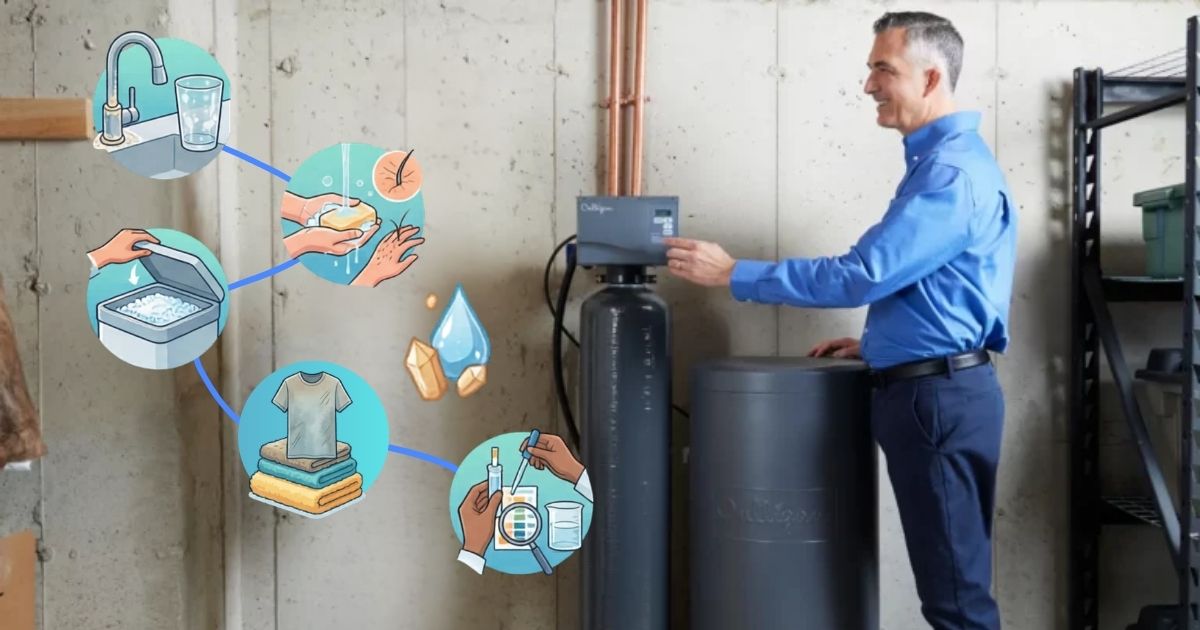
If you are trying to figure out how to check your water softener, there are a few simple steps you can take at home (see infographic above):
- Start with a basic observation. Do the signs of hard water appear in multiple areas of your home, or just one? If it is isolated, the issue may not be the softener itself put a pipe.
- You can also compare water feel and soap lather levels. Soft water should feel smoother, allow soap and shampoo to lather easily without using excess amounts, and leave fewer visible residues.
- For a more objective approach, a water test is the most reliable way to understand what is happening. Testing shows whether hardness minerals are still present and at what levels.
Why Water Still Feels Hard Sometimes
A common frustration is when homeowners say, “I have a water softener, but my water still feels hard.”
In many cases, the system is not completely failing. It may simply not be performing at its optimal level. This can happen due to flow rate, regeneration timing, or changes in incoming water quality.
Water conditions in Des Moines can shift throughout the year, which means a system that worked well months ago may need adjustment or verification today.
When It Makes Sense to Take a Closer Look
If you are noticing small changes, it can be helpful to check performance before those changes become more noticeable or start affecting appliances and plumbing.
This does not mean replacing your system. In many cases, it simply means confirming that everything is working the way it should.
Culligan of Des Moines works with homeowners who already have equipment, including systems we did not install with our “Inspect and Check” service. The goal is to provide clarity so you know exactly where things stand.
A Simple Next Step
If you are unsure whether your water softener is working properly, the most straightforward step is to test your water and review the system’s performance.
For homeowners who want a more detailed look at their current system, Culligan also offers an Inspect and Check service ($79.99) that focuses specifically on evaluating performance and identifying any adjustments that may be needed.
Frequently Asked Questions About Water Softener Troubleshooting
Not necessarily. In many cases, the system may only need maintenance, adjustment, or servicing. An inspection can help determine whether the system can be improved or if other options should be considered. Culligan of Des Moines offers this for $79.99.
You can do basic checks at home by observing water feel and looking for signs of hardness, but a proper water test provides a clearer and more accurate picture of what is happening. Culligan of Des Moines offers free at-home water tests.
Most systems benefit from being checked every six to 12 months, especially if you notice changes in water quality or usage. Seasonal shifts, like those in spring, are a good time to verify that everything is working properly. Culligan of Des Moines offers this service for $79.99.
This can happen if the system needs adjustment, maintenance, or is not keeping up with your household’s water usage. Changes in incoming water quality can also affect performance over time.
Common signs include white residue on glassware, stiff laundry, buildup on faucets, and water that feels less smooth on your skin. These changes often happen gradually, which is why they can be easy to overlook at first.
You can usually tell by changes in your water. If you notice spots on dishes, reduced soap lather, dry skin, or scale buildup, your softener may not be performing as expected. A water test is the most reliable way to confirm if hardness minerals are still present.
Final Thoughts
Water softeners are designed to work quietly in the background, which is why it can be difficult to know when something has changed.
Taking the time to check your system, especially during seasonal transitions, helps you stay confident in your water and avoid guesswork.
If you ever have questions, the best place to start is simply understanding what your water is doing today.


